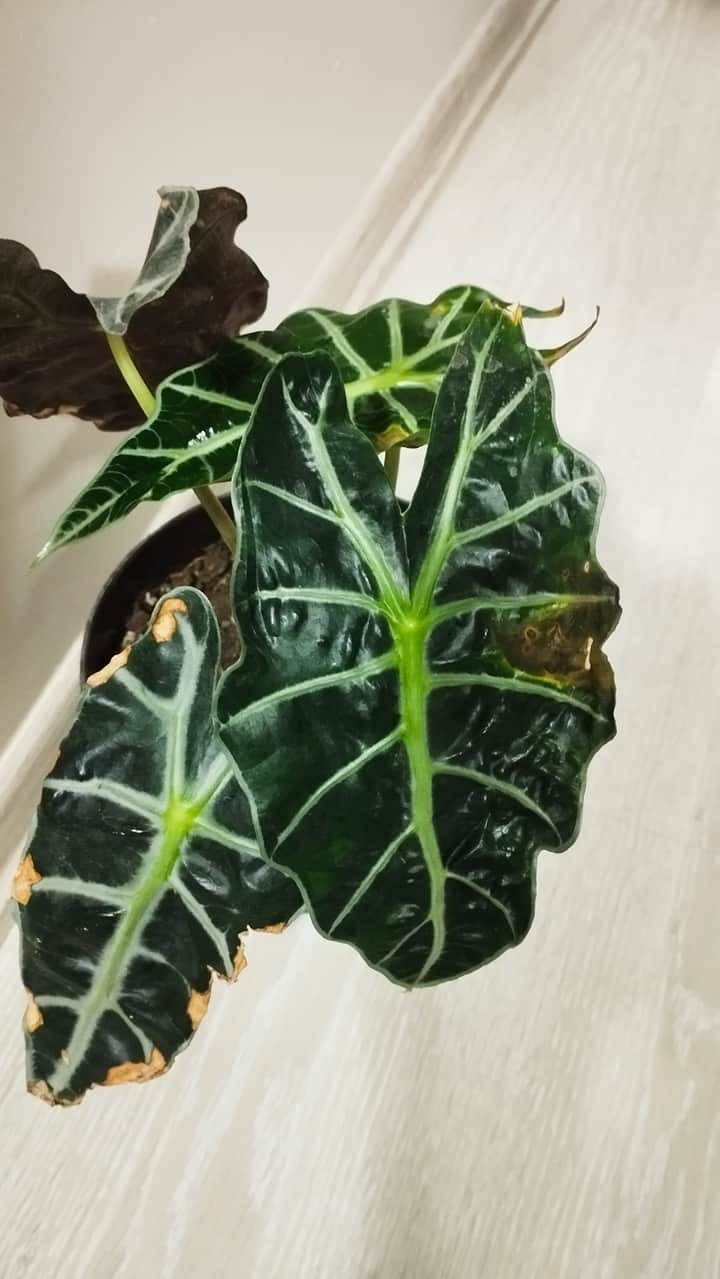
Why are the edges of my Alocasia leaves turning brown and curling? How can I fix it?
Answer:
Your Alocasia plant shows classic signs of leaf edge browning and curling, which is a common issue caused by environmental stress or improper care. Let’s explore the possible reasons and how to fix them in detail.
Table of Contents
- Understanding Alocasia Leaf Browning and Curling
- Common Causes
- How to Fix and Prevent Leaf Browning
- Care Tips for Healthy Alocasia Leaves
- Summary Table
1. Understanding Alocasia Leaf Browning and Curling
Alocasia plants are tropical beauties with large, glossy leaves that need specific care. When the leaf edges turn brown and curl, it usually signals stress. This damage can be due to:
- Water stress (too much or too little water)
- Low humidity
- Nutrient deficiencies or salt buildup
- Light stress (too much direct sunlight or too little light)
- Pest damage or disease
2. Common Causes
| Cause | Symptoms | Explanation |
|---|---|---|
| Underwatering | Dry, crispy brown edges, curling leaves | Leaves dry out due to lack of water; plant cannot maintain turgor pressure. |
| Overwatering | Yellowing leaves, root rot, brown edges | Roots suffocate and rot, reducing water uptake; leaves show stress symptoms. |
| Low Humidity | Brown, dry leaf edges, curling | Alocasia thrives in high humidity; dry air causes leaf dehydration and damage. |
| Direct Sunlight | Scorched, crispy brown patches on leaves | Alocasia prefers bright, indirect light; direct sun burns leaf tissue. |
| Salt or Fertilizer Buildup | Brown leaf tips and edges, leaf curling | Excess salts from fertilizer accumulate, causing leaf burn. |
| Pest Infestation | Spots, holes, curling, sticky residue | Spider mites, aphids, or thrips can damage leaves causing discoloration and curling. |
3. How to Fix and Prevent Leaf Browning
Step-by-step care adjustments:
-
Watering:
- Check soil moisture by inserting your finger about 2-3 cm deep.
- Water only when the topsoil feels dry but not bone dry.
- Use room temperature, filtered or rainwater if possible to avoid chlorine and salts.
- Ensure pot drainage is good to prevent waterlogging.
-
Humidity:
- Increase humidity to 60-80%.
- Use a humidifier near the plant.
- Group plants together or place the pot on a pebble tray with water.
- Mist leaves occasionally but avoid overdoing it to prevent fungal issues.
-
Light:
- Provide bright, indirect light.
- Avoid direct sunlight which causes leaf scorch.
- If natural light is insufficient, use grow lights with a timer for 10-12 hours/day.
-
Fertilization:
- Use a balanced, water-soluble fertilizer diluted to half strength every 4-6 weeks during growing season.
- Flush soil occasionally with water to prevent salt buildup.
-
Pest Control:
- Inspect leaves regularly.
- Wipe leaves with a damp cloth.
- Use insecticidal soap or neem oil if pests are detected.
-
Remove Damaged Leaves:
- Trim brown edges carefully with sterilized scissors.
- Remove severely damaged leaves to redirect energy to healthy growth.
4. Care Tips for Healthy Alocasia Leaves
| Care Aspect | Ideal Condition | Notes |
|---|---|---|
| Watering | Keep soil consistently moist but not soggy | Avoid letting soil dry out completely |
| Humidity | 60-80% | Tropical plant; low humidity causes leaf damage |
| Light | Bright, indirect sunlight | Avoid direct sun; too little light slows growth |
| Temperature | 18-27°C (65-80°F) | Avoid cold drafts and sudden temperature changes |
| Soil | Well-draining, rich in organic matter | Use peat-based or aroid mix with perlite |
| Fertilizer | Balanced NPK, diluted, every 4-6 weeks in growth | Avoid over-fertilizing to prevent salt burn |
5. Summary Table
| Problem | Cause | Solution |
|---|---|---|
| Brown leaf edges | Underwatering | Water when topsoil dries |
| Brown leaf edges | Overwatering | Improve drainage, reduce watering frequency |
| Leaf curling & browning | Low humidity | Increase humidity with humidifier or pebble tray |
| Leaf scorch | Direct sunlight | Move to indirect light |
| Leaf tip burn | Salt buildup | Flush soil, reduce fertilizer concentration |
| Leaf damage | Pests | Treat with neem oil or insecticidal soap |
Summary
Your Alocasia’s leaf browning and curling are most likely due to low humidity, inconsistent watering, or light stress. By adjusting watering habits, increasing humidity, providing proper light, and checking for pests, you can restore your plant’s health and keep those beautiful leaves vibrant.
If you follow these care tips consistently, your Alocasia will thrive and the leaf damage will reduce over time.
References:
- Botanical Society of America – Alocasia Care
- Royal Horticultural Society – Houseplant Care
- Recent studies on tropical plant humidity requirements (2023)